

How DPSH Testing Transformed Our Site Investigation in the Western Cape
Landfills aren’t typically known for innovation—but when it comes to building critical infrastructure on complex ground, a smart approach to site investigation can make all the difference.
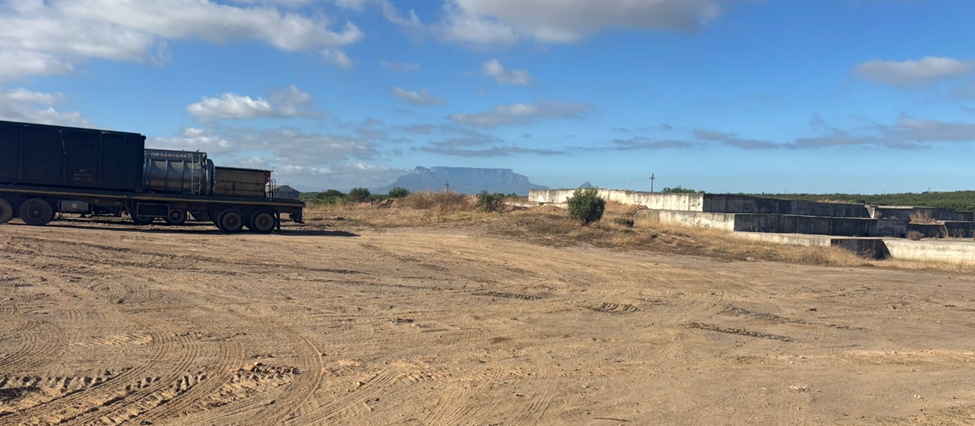
Recently, we undertook a Phase 1 geotechnical site investigation at a waste management facility in the Western Cape, South Africa. The site is an active landfill, designed for the disposal of general and low- to medium-hazardous waste—the types of materials that cannot be reused or recycled. Now, with the facility expanding its utility, a gas extraction plant has been proposed to harness the landfill’s untapped energy potential.
But before any foundation is laid, we needed to answer one critical question: What lies beneath?
The objective of our investigation was to assess the subsurface conditions across the proposed development area and to recommend appropriate foundation solutions based on actual ground conditions. The study involved a combination of conventional test pitting and soil profiling, Dynamic Probing Super Heavy (DPSH) testing, and laboratory analysis of selected soil samples.
While test pits gave us an initial understanding of the shallow ground, it was the DPSH testing that proved invaluable—revealing key soil strength characteristics at depth, ultimately guiding us toward a more cost-effective and reliable foundation strategy than test pits or boreholes alone could offer.
In this blog, we’ll take you through our investigation step-by-step, highlight how DPSH testing added significant value, and share some key takeaways for anyone planning infrastructure on similarly challenging ground.