

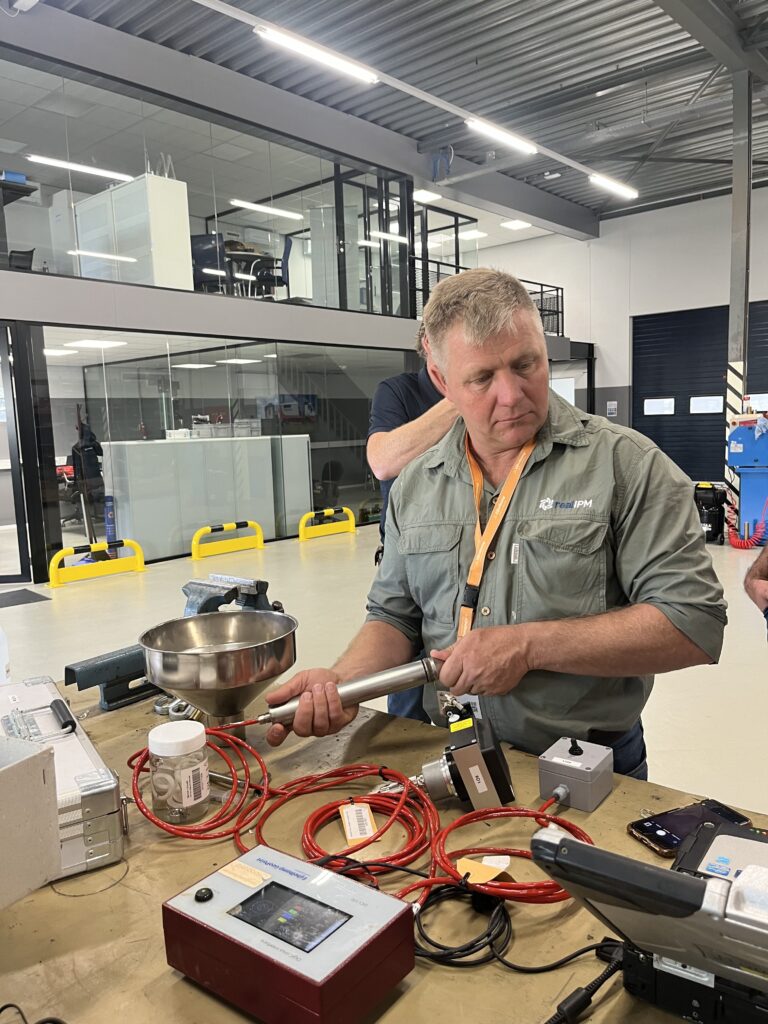
The Cone Penetration Test with pore pressure measurement (CPTu) is an advanced geotechnical testing method used to determine the properties of soils and delineate soil stratigraphy. During the test, a cone-shaped instrument equipped with sensors is pushed into the ground at a constant rate. Continuous measurements are taken of the cone resistance (qc), sleeve friction (fs), and pore water pressure (u2). This additional data on pore pressure helps engineers more accurately assess soil characteristics such as strength, drainage conditions, density and composition, making CPTu a valuable tool for Tailingst storage facility stability analysis, foundation design, and other geotechnical applications.
Standards Compliance
- ISO 22476:1 (2022): Geotechnical investigation and testing — Field testing — Part 1: Electrical cone and piezocone penetration test
- ASTM D5778-12: Standard Test Method for Electronic Friction Cone and Piezocone Penetration Testing of Soils
Advantages
- Fast and continuous Information: Provides a near-continuous profile of soil properties, allowing for detailed stratigraphic analysis, which is faster than traditional methods.
- Operator-Independent Results: The automated nature of the test reduces human error, ensuring consistent and reliable data
- Added Pore Pressure Data: Includes measurements of pore water pressure, enhancing the understanding of soil behavior, especially in saturated conditions.
- Inexpensive Compared to Drilling: More locations can be investigated in the same amount of time, reducing overall cost.
- Relatively Quick: Can be performed rapidly, saving time on site investigations.
- Great Rig Mobility: The equipment is highly mobile, making it suitable for various site conditions and locations
- Solid theoretical background: well established empirical correlations and theoretical frameworks support
- Testing soils that are difficult to sample